St. John's Wort While Breastfeeding
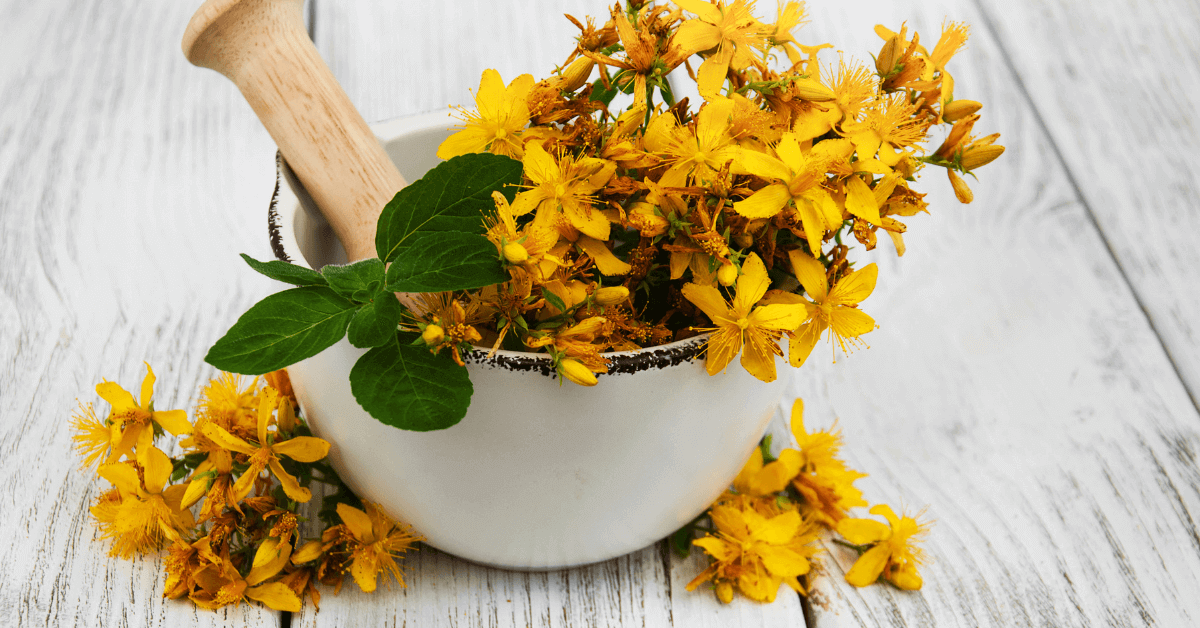
St. John’s Wort for Postpartum Depression
Are you considering St. John's Wort (SJW) for postpartum depression?
Even though it’s become the most popular alternative to pharmaceuticals for depression in Europe and the US, it's so much more than the "depression herb".
Let's dive in.
Here's my promise to you: by the end of this post, you’ll understand the risk/benefit ratio and determine if SJW is right for you and the ONE person who should not take St. John’s wort.
St. John's Wort can be useful for some types of depression, but it also has great benefits for anxiety, grief, melancholia, estrogen clearance, and numbness due to nerve pains and/or damage.
Can you take St. John’s Wort while Breastfeeding?
There are three references I look toward to see if a botanical is safe while breastfeeding.
#1 St. John's Wort is considered a Level 2/3 by the German Commission E. in Dr. Aviva Romms's Book; Botanical Medicine for Women's Health¹.
What does that mean?
Level 2: Safer; Limited studies demonstrated, but no increased risk
Level 3: Moderately Safe; No controlled studies in breastfeeding women or controlled studies demonstrate minimal adverse effects
There are limited studies that show no increased risk in the child's health. Many studies have been flawed due to the poor use of extracts or questionable preparation of the product.
In one study, women ingested 300 mg of St. John's Wort a day and low levels of hyperforin were detected in breastmilk, however, no constitutes of the herbs was detectable in the babies plasma and no adverse effects were observed in either. Source
#2 Lactation and medication experts Thomas Hale & Hilary Rowe- authors of Medications and Mother’s Milk suggest transfer to milk is minimal and appears to be safe during lactation. ¹
However, one infant in each group was reported to be colicky, but there was no change in milk production and weight of the infants ¹
#3 The essential guide to herbal safety by Mills & Bones considers St. John's Wort a Lactation Category CC. Compatible with breastfeeding, but use caution.
It appears the most common side effects would be colic, drowsiness, and lethargy, giving the mother a signal to stop taking the botanical
And, keep in mind.. a small percentage of women have an increase in depression when they take St. John's Wort. So, if you notice any adverse effects, stop taking the supplement or tincture.
St. John's Wort Dosing
I prefer to take SJW as a tincture.I like to test one herb at a time. Then, when I feel comfortable, I like to use a combined tincture of SJW and nervines to soothe the nervous system.
But moms also like the convenience of a supplement.
Tincture Dosing: 40-60 drops; 3-4x day
Capsules: 300- 350mg of standardized extract 3x day {0-3% total hypericin}
Internally, you can take St. John's Wort as a tincture or supplement for:
sciatica
as an antiviral to reduce cold symptoms
seasonal affective disorder (SAD)
menopause
Monthly PMS blues
mild/moderate depression
** My favorite reason to take SJW is for detoxification to reduce excessive estrogen levels and to reduce PMS & PMDD
Externally, it has many benefits as well.
When you place the flowers in St. John's Wort in oil, it turns red. Use this oil externally/topically for:
spinal/ nerve injuries due to childbirth
vulvodynia (vaginal pain)
also for first-degree burns, bruises, bites, and puncture wounds
Can you take St. John's Wort for Postpartum depression?
Watch this video to learn more.
Who should avoid St. John's Wort?
St. John’s Wort is well-known for enhancing liver detoxification, which reduces the blood levels of many medications.
Anyone taking the following medications should skip St. John’s Wort for now
==Avoid St. John's Wort if you're taking warfarin, digoxin, protease inhibitors, organ transplant antirejection drugs, or chemotherapy
Use caution with oral contraception
Use under a physician's supervision if you're taking antidepressants
In large doses, you may notice photosensitivity to sunlight and want to avoid this
It's also contraindicated during pregnancy; however, safety studies are lacking
In short...
St. John’s wort can be used during breastfeeding when you purchase a standardized product from a reputable company. Standardization of the herb is to guarantee that the consumer is getting a product in which the chemistry is consistent from batch to batch.
Look for 300 mg 3x day to decrease postpartum depression and watch for adverse effects like colic, lethargy, and an increase in depression in mom.
Keep in mind, it takes a comprehensive approach to overcome postpartum depression, and this is just one part of the puzzle.
Nervines are also needed to soothe the nervous system after childbirth.
Ashwagandha vs St. John's Wort
Can't decide where to begin?
Watch the video above to learn more.
xoTara
References:
American Herbal Products Associations; Botanical Safety Handbook ↩
Hales; Medications and Mother’s Milk: https://amzn.to/35XZFq5- more about conventional medication and nursing ↩
Bone & Mills: Principles and Practice of Phytotherapy↩
Aviva Romm: Botanical Medicine of Women’s Health- Categories from the German Commission E. pg 887 ↩
Brinker, Francis: Herbal Contraindications and drug interactions ↩
https://pubmed.ncbi.nlm.nih.gov/16566628/#:~:text=The%20only%20existing%20report%20on,John's%20wort. ↩