The Dangers of Vitex Chaste Berry
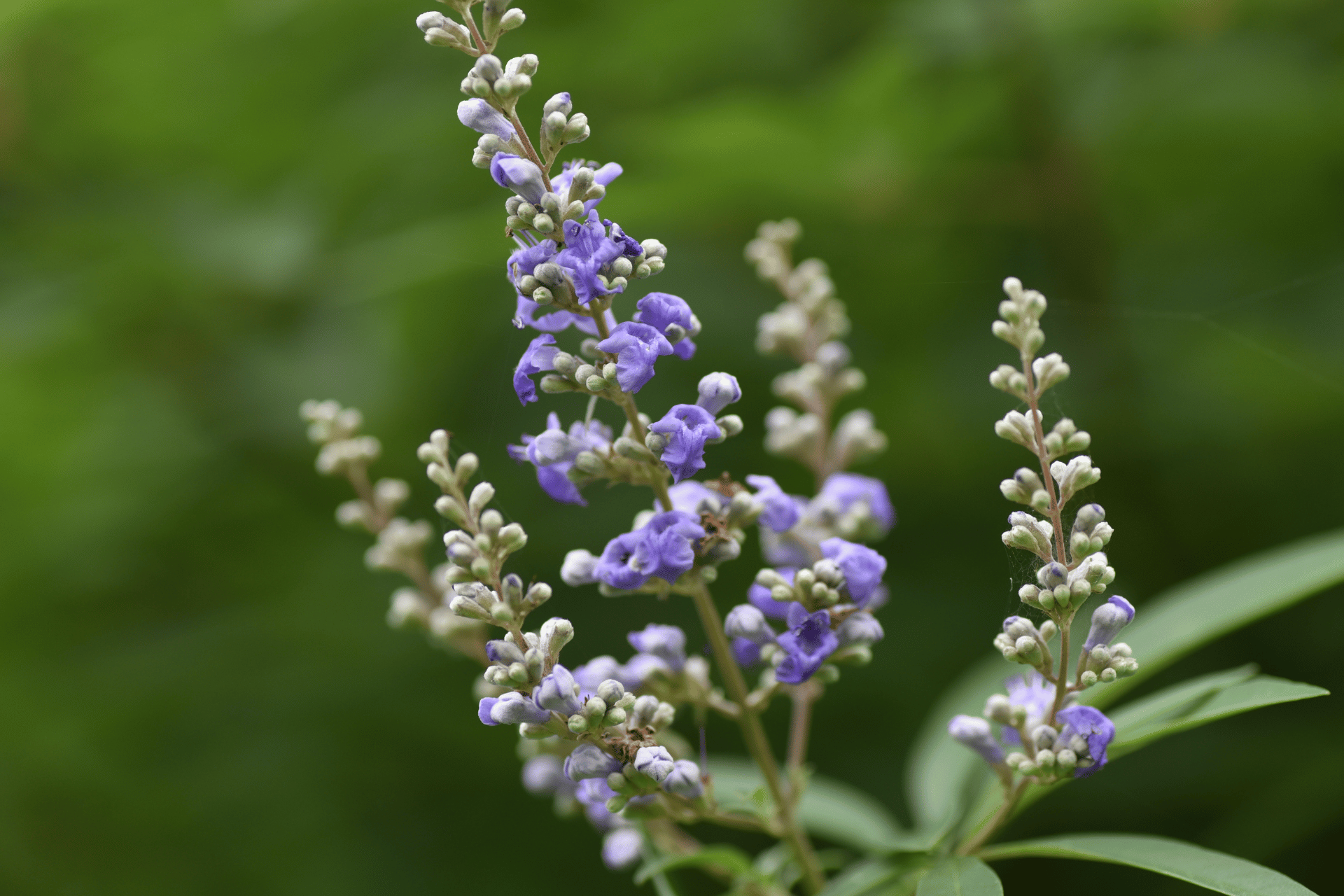
Vitex agnus-castus, also known as Vitex Chaste Berry or simply Vitex, is a well-known botanical for women’s health.
In modern medicine, it’s led us to believe that it increases progesterone and decreases estrogen.[1]
In this post, I’ll describe the many strange uses for Vitex for all ages, the many different ways to take Vitex, and the dangers you may encounter for women struggling with postpartum depression and low estrogen.
In closing, I will describe how I’m now using it successfully in the perimenopausal years to lengthen my cycle.
What is Vitex Chaste Berry?
Native to the Mediterranean area, the berries have been used for decades for women’s complaints.
Historically Used
Agnus, derived from the Greek word “agnes”, means pure or chaste, and the berries were once used to suppress libido among monks in the Middle Ages. Additionally, Vitex was used to promote lactation, decrease menstrual irregularities, decrease male libido, and enhance female fertility. [2]
Vitex Chaste Tree Uses
Modern Uses: Vitex Chaste Berry is known to influence pituitary secretions (including prolactin) and raise luteinizing hormone, thereby stimulating the release of progesterone in the luteal phase of our cycle - the second half of our menstrual cycle, AFTER ovulation.
It inhibits FSH and prolactin- this is what lowers the sex drive in men.
In Matthew Wood's book, “The Earthwise Herbal Volume 1”, he states how an herbalist, Margi Flint, says vitex is a remedy for people “caught between the material and spiritual works”.
For boys who are oversexed and obsessed with sex, it tends to calm them down.
Known as “monks’ pepper”, the botanical was known to decrease prolactin and was used as a chastity remedy for monks in the Middle Ages.
For younger people, it is indicated by the “hunter look”.
I’m speculating here, but maybe the child’s thyroid is off, or they’ve experienced a trauma, creating this look of fear.
Not all practitioners suggest Vitex for teenagers, but I would prefer this remedy over birth control pills and have used it with my eleven-year-old daughter in small amounts to regulate her cycle.
As a pituitary stimulator, it’s been known to help children with attention-deficit disorder.
Breastfeeding moms
Vitex can lower prolactin, which may bring your menses back sooner than you’d like.
It’s not suggested for breastfeeding moms, or at least don’t exceed 250 mg/day {1/4 of a dropperful} [3]
Although considered safe during lactation, Category B1, it’s not suggested to take during breastfeeding years, due to the dopaminergic activity. {releasing of dopamine}
In menopause or older, it can have a stimulating effect on the sex drive. It “brings back the spice and rekindles the fire”.
Promotes progesterone production through hypothalamic pathways and may reduce hot flashes in perimenopausal and menopausal women.
Prenatal
Vitex has been used by herbal practitioners to prevent miscarriages in women who’ve had a history of miscarriage. ⁷
Raising the luteinizing hormone, Vitex can extend your menstrual cycle, encourage childbirth, and reduce excessive bleeding that tends to occur during the perimenopausal years.
Caution: Don’t mix Vitex with Hormone Replacement Therapy or the birth control pill.
Vitex Chaste Berry Qualities:
Cool, bitter, and affects the liver and spleen.
How to take Vitex Tincture
Vitex Chaste Berry Dosing: Varies depending on your symptoms, if you’re postpartum, and your health goals.
It’s common practice to take 1-5 ml of tincture in the morning before any other foods or supplements, throughout the cycle. It is considered that hormonal regulation via the pituitary is more receptive to this order.
Please note: This suggestion did cause my depression to worsen.
Other dosing ideas
If your cycle is less than 28 days, and you’re not ovulating
Take Vitex on Days 7-14, then stop, start with just 1 drop, and work your way up to 5 drops in 1/4 cup of water.
This will raise your LH, have you ovulate, and lengthen your cycle
If you don’t have regular periods
Take it for 25 days, then stop for five days, then repeat until a regular cycle is established, skipping the days of your cycle; Day 1-7.
If you’re breastfeeding
Vitex Chaste Berry can downregulate prolactin production. So if you’re breastfeeding, start slow and watch for milk production. If it drops, and your period returns, reduce your daily dose.
Dosing: Lower the dosing to 1ml in the am if you’re breastfeeding and don’t want your period to return. As you increase the dosage, watch for your cycle to return and lower the amount based on your unique needs.
If your postpartum depression gets worse, stop taking it. You could have low estrogen, and Vitex would make it worse.
They don’t suggest it for teenagers, but I would prefer this over birth control pills
The Dangers of Vitex Chaste Berry
Vitex Chaste Berry may raise progesterone and, in turn, allopregnanolone.
Allopregnanolone is a potent neuroactive steroid and GABA-A receptor positive modulator, our calming system, synthesized from progesterone in the brain and peripheral tissues.
Patients with PMDD show decreased sensitivity in GABA-A receptor sensitivity to diazepam and pregnanolone, while increased sensitivity to allopregnanolone.[4]
At higher levels, allopregnanolone can be calming and pain-relieving.
But, at low to moderate levels, it can cause 25% of women to have increased anxiety, irritability, depression, or low mood.
Women with premenstrual dysphoric disorder (PMDD) have severe luteal phase-related symptoms; in this phase, they show changes in GABA(A) receptor sensitivity and GABA concentrations that are related to the severity of the condition. [6]
Postpartum Depression: In the case of vitex and depression, it seems that for patients with PMS-D, their depression is due to low estrogen levels, and vitex can worsen their symptoms. [7]
This happened to me.
I took 5ml of Vitex daily after having the twins. I suffered from a deeper depression and psychosis due to this.
Knowing what I know now about Vitex Chaste Berry..
I would have taken just 1 drop of Vitex Day 7-14 if my cycle was too short.
If not, I should have chosen Shatavari for postpartum depression and worked on my blood sugar spikes and cortisol levels.
Where to purchase Vitex Chaste Berry?
Log in to Fullscript to see all the companies we know, love, and trust and save 15% off.
You can try a Vitex tincture or supplement blend based on your unique symptoms.
Conclusion
Vitex Chasteberry can be a wonderful botanical when used correctly. Working with a practitioner who's looking at your full constitution and symptoms can be extremely helpful. Additionally, using herbal blends with Vitex Chasteberry can be safer than using a single remedy of a tincture or supplement.
Begin with just one drop of Vitex Chasteberry in water to see how your body responds to it if you experience any negativity or dips in your mood, I would stop the supplement right away.
xo
Tara
P.S. Have you used Vitex before? What has your experience been like? Let me know in the comment area below.
Resources
[1] The Earthwise Herbal, Volume I, Mathew Wood, Page 523
[2, 3] Principles and Practice of Phytoptherapy, Mills and Bone
[4] Allopregnanolone and Mood Disorders. Progress in Neurobiology. 2014. Bäckström T, Bixo M, Johansson M, et al.
Psychoneuroendocrinology. 2009. Andréen L, Nyberg S, Turkmen S, et al.
Journal of Neuroendocrinology. 2018. Bixo M, Johansson M, Timby E, Michalski L, Bäckström T.
Progesterone and Its Metabolites Play a Beneficial Role in Affect Regulation in the Female Brain.
Pharmaceuticals. 2023. Stefaniak M, Dmoch-Gajzlerska E, Jankowska K, et al.