5 Herbal Remedies for Postpartum Depression
Louise Hay's book “Heal Your Body” states depression is: “Anger you don’t feel you have the right to have. Hopelessness.”
Her mantra helps align you and your thoughts. Repeat this mantra: “ I now go beyond other people’s fears and limitations. I create my life.”
Does this resonate with you?
Now that you're a mother - “What do you want to change in your life?”
I struggled with postpartum depression for over two years after having twins, and during this time, I found writing helped me express what I couldn’t say out loud.
In this post, we’ll discuss the five herbal remedies that can help you shift or “breakthrough” depression, plus four proven remedies to relieve depression so you can go beyond your fear of the past and your unwritten future.
“Additionally, depression, insomnia, and anxiety go hand in hand. So we need to heal all three to feel like ourselves again. ”
5 Natural Herbs for Postpartum Depression
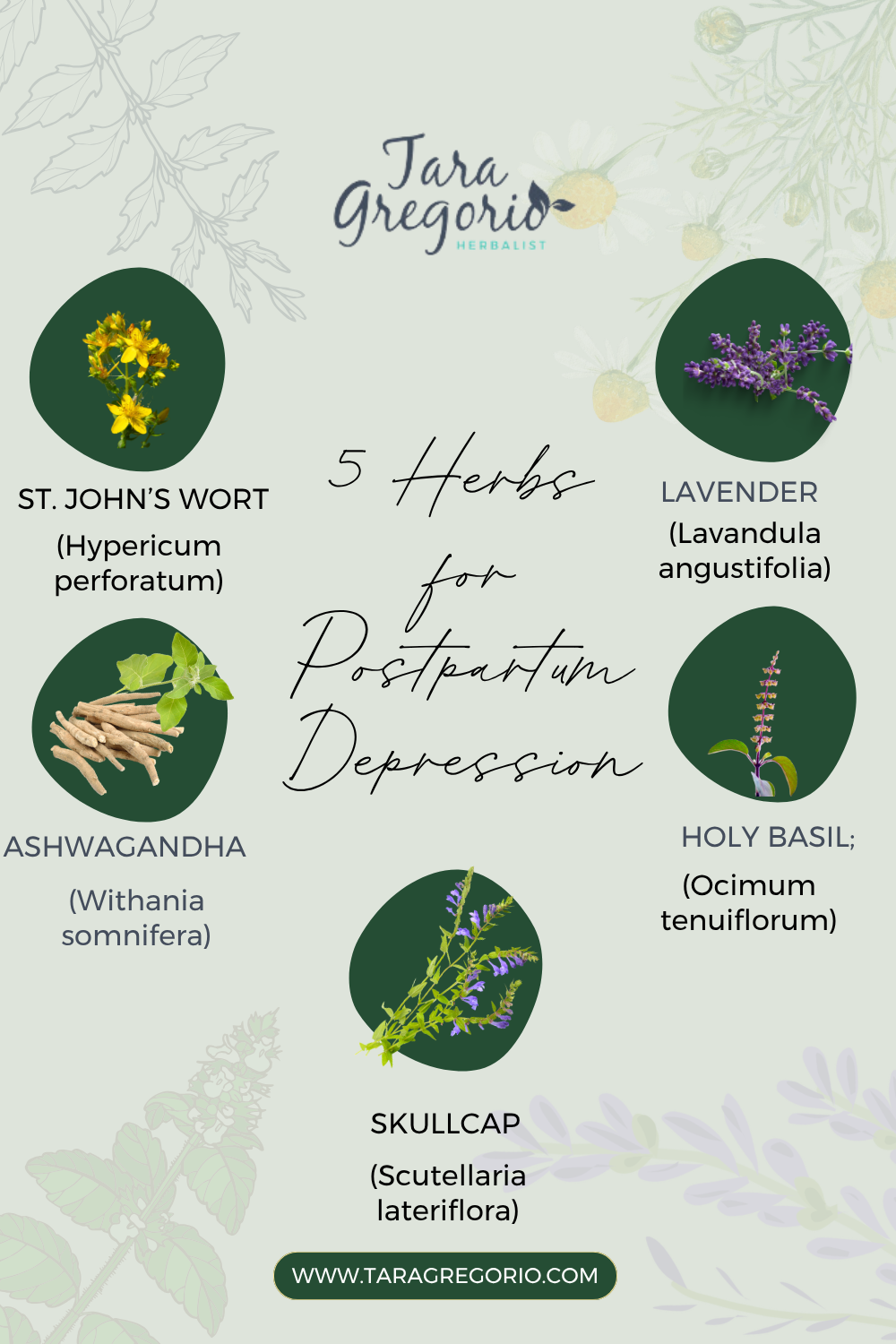
Known as the #1 antidepressant herbal remedy, St. John’s Wort has helped many women. But it also has many other benefits.
#1 St. John’s Wort- Hypericum perforatum
Historically, it was used for:
The nervous system, anxiety, and nervousness - hysteria
Nerve pain and nerve damage
Modern Day Use:
mild to moderate depression with a sour disposition or sour stomach
chronic pelvic pain, PMS & insomnia
too much estrogen, a.k.a.“estrogen dominance”, as it helps clear the liver
no joy in life
Breastfeeding Safety:
L2/L3 Safer/Moderately Safe {The complete German Commission E monographs}
Lactation and medication expert Hale states that St. John’s Wort is safe while breastfeeding. ²
Good for if you’re feeling…
like you can cry easily {even if it’s the week before your period}
You’re having negative or intrusive thoughts
need more liver support
Dose:
A standard adult dose is 300 mg 2-3 times/day, of a product standardized to 0.3% hypericin while breastfeeding or 2-4% hyperforin
Or 20-30 drops of a tincture 2-3x day.
Contraindication:
As it enhances liver detoxification, avoid using birth control pills, SSRIs, warfarin, digoxin, protease inhibitors, chemotherapy, and organ transplant antirejection medicine when taking St. John’s Wort. Consider working with an herbalist if you’re taking these medications.
Pro tip:
Use it in a blended tincture formula first and see how you respond. Use for short periods and watch for any skin changes.
This is the number one herb to interfere with SSRIs, so please work with an herbalist and doctor if you’re trying to come off your medications and use herbal medicine instead.
#2 Ashwagandha - Withania somnifera
Historically used for:
The Ayurvedic medical system used it for premature aging. Dubbed the “Indian ginseng.”
It’s known to give you the strength and stamina of a stallion.
Traditionally, it was made as a decoction with the root.
Modern uses:
Used as an adaptogen to relieve stress
Mild sedative, pain reliever, anti-inflammatory
Slow, restorative builder of strength
It’s now found in powders, coffee, and supplements
It’s bitter, warm & dry - so if you are feeling dry, you may want to skip this botanical
Breastfeeding Safety:
L1, safe with the German Commission E.
Good for if you’re feeling…
I’m tired and wired
I can’t fall asleep
I’m in pain
I’m nervous & anxious
I have chronic pain
Contraindications
You may want to avoid it if you’re sensitive to nightshade plants or tend to be more Pitta body in Ayurvedic medicine {thin and tend to run hot}
Dosing: Tincture 20-30 drops OR as a powder form; follow the directions on the packaging
#3 Motherwort - Leonurus cardiaca
Leonurus cardiaca- Known as “The heart of a lion.”
Historically Used for:
Postpartum depression, anxiety with palpitations, and stress
Modern uses:
Heart palpitations, uterine tonic, hyperthyroidism, and as a bitter to stimulate the liver. As it is bitter, clients say it causes digestive issues. Look for a blended formula to ease this complaint.
Good for all female complaints:
cramps
PMS
peri-menopause
menopause
insomnia
Breastfeeding Safety:
L1/L2 by The German Commission E - Safest
Contraindications:
Not to be used during pregnancy
Dosing:
Take it individually during a panic attack and/or heart palpitations; even in the middle of the night
Take in a blended tincture with a total of 20-30 drops 2-3x days with anxiety and/or depression
#4 Mimosa - Albizia julibrissin
Historically used for:
In Chinese medicine, this botanical is known as “collective happiness bark.”
Used for disturbed sleep, irritability, anger, and depression
Modern-day uses:
Master herbalist, David Winston,n suggests using Hawthorne berries and rose petals for grief and broken hearts. It helps you move quickly from sadness, tears, and pain to emotional balance.
Breastfeeding Safety:
Master herbalist, David Winston, says it has a 2 1/2 rating and Safety Class 1 with Botanical Safety Handbook - safe
Contraindications:
Do not use it during pregnancy.
Caution with antidepressants
Dosing:
As a tincture: 20-30 drops; 2-3x day or in a blended tincture
#5 Holy Basil- Ocimum tenuiflorum {also known as Tulsi}
Historically used for:
Sacred to the Hindu god Vishnu, prayer beads are made from the plant’s stem
Classified as a Rasayana, an herb that nourishes a person’s growth to perfect health
Known to balance the chakras
Used as an expectorant as well
Modern uses:
Antioxidant, stress-reducing, and radio-protective
Lowers blood sugar, prevents ulcers, and inhibits allergies
Relieves “brain fog.”
“In the book “Adaptogens”, Master Herbalist David Winston uses Holy Basil for “stagnant depression”. When you’re unable to move on from trauma. Combine Holy basil, damiana, rosemary, and lavender to heal depression. ”
Breastfeeding Safety:
Safety Class 1, Interaction Class A with Botanical Safety Handbook
Contraindications
Not to be used by pregnant women or if you’re trying to get pregnant as it may have anti-fertility effects
Dosing:
Tincture 20-30 drops OR daily as a cup of tea
6 Natural Treatments For Postpartum Depression
#1 Exercise
As a new mom, you may notice you’ve stopped moving and sweating. It’s so important that you begin to sweat again to move the toxins out and to boost endorphins. The proven postpartum depression treatment includes daily exercise to relieve your symptoms.
If you’re too tired to exercise, consider sweating and bright light therapy to help release toxins and gain energy.
Mild/Moderate depression
Exercise: 2-3x week for 20-30 min to reduce depression.
Major depression
Exercise: 3-5x week
45-60 min at 60-85% capacity
#2 Bright Light Therapy
An illumination of 10,000 lux for 30-40 min is the most common dosage to relieve depression.
Light therapy in the morning is best. Here are three companies to look into. Additionally, heading outside to go in nature daily; especially @ 9:00 am, and gazing into the sun has been known to alleviate depression.
www.sunbox.com
I believe Higher Dose would be a great option as well:https://www.taragregorio.com/blog/honest-review-of-higher-dose
#3 Therapy
There are so many types of therapy to try. Yes, it’s time-consuming and expensive, but when you find the right therapist - BOOM, your life can change.
Here are some therapies I’ve explored over the years, and watch the video below on how EMDR transformed my mental health.
EMDR - Eye movement desensitization
Art therapy
DNS- Dynamic Neuromuscular Stabilization
Primal Trust
Brain retraining
#4 Vitamins for postpartum depression
Moms with depression tend to be low in Vitamin D, Zinc, and Methylated B vitamins {folate, not folic acid}
If you seek out a natural doctor, they may suggest a high dose of methyfolate (1-4mg) and suggest you skip folic acid <<read that again.
Additionally, high doses of Vitamin D3 for a short amount of time may be needed. Have your Vitamin D levels checked, then consider…
Take up to 10,000 iu daily, then retest 3 months later and continue with a lower dose until you’ve reached a steady amount.
Moms with depression also tend to have the MTHFR gene.
If you do have one of the SNPs affecting your health, you’ll want to change your vitamin to L-Methylfolate and skip folic acid.
Read more about it here: https://www.taragregorio.com/blog/postpartum-recovery-how-the-mthfr-gene-affects-your-health
Learn more about postpartum vitamins in this post:
#5 Daily probiotic
The gut-brain axis is the specific pathway that involves the neural, endocrine, and immune systems.
It has been hypothesized that restoring your gut flora can relieve anxiety, alleviate depression, reduce inflammatory cytokines, and reduce HPA axis overstimulation.
Basically, you heal your gut, you’ll heal your mood.
Look for probiotics that contain Lactobacillus and Bifidobacterium species; to reduce the stress response.
Struggling with anxiety and depression?
Bifidobacterium infants and B. long are found to be beneficial in reducing depression, irritability, and anxiety.
Dosing: 1-2 capsules a day with a minimum of 10 billion CFUs daily
#6 Omega 3
Omega-3–3 fatty acids are EPA (eicosapentaenoic acid) and DHA (docosahexaenoic acid), these are found in fatty fish and have been shown to reduce inflammation and depression, protect the nervous system, and boost your mind and mood.
When used with anxiety medications, it can help your medication work more effectively.
DHA has to be combined with EPA for full effects.
Fish oil is the best source, although vegetarian DHA is still available
Food Sources for Omega-3s
Fish {wild salmon and sardines}
Walnuts
grass-fed beef
pasture-raised eggs
If you don’t eat fish, algae-based vegetarian Omega-3 sources are available.
Dose:
200-400mg DHA for prevention of depression, up to 800-1000mg may soon be recommended
1,000 EPA for treatment of depression
Rejuvenation Science Labs has a vegan DHA and EPA supplement.
Dosing: Ask your doctor about taking 1-2 capsules/day {1500 mg/day}
Conclusion
Healing is possible. When you combine diet, supplements, herbal medicine, amino acids, and nervous system regulation, your body can heal. Additionally, don’t forget to ask for help.
Often, we are ashamed or embarrassed to tell others we’re struggling. The first step for healing is to ask for help.
Repeat this mantra daily:“ I now go beyond other people’s fears and limitations. I create my life.”
Start writing down..
What kind of mom do you want to be?
What can you change to improve your life?
What happened at birth that made you so angry?
If you love writing… make a cup of tea, grab a notebook, and start writing down these questions to get started:https://www.taragregorio.com/blog/writing-through-postpartum-depression-13-writing-prompts-for-mental-health
xo
Tara
P.S. Have questions? Ask below or schedule a free call, I’d love to help.
Resources
Brinker, Francis: Herbal Contraindications and drug interactions ↩
https://www.taragregorio.com/blog/postpartum-depression-and-anxiety-resources ↩
American Herbal Products Associations; Botanical Safety Handbook ↩
Hales; Medications and Mother’s Milk: https://amzn.to/35XZFq5- more about conventional medication and nursing ↩
Bone & Mills: Principles and Practice of Phytotherapy ↩
Aviva Romm: Botanical Medicine of Women’s Health- Categories from the German Commission E. ↩
Brinker, Francis: Herbal Contraindications and drug interactions ↩