Seven Steps for Natural PMS Treatment

PMS Is Common, But Not Necessary
PMS, or Premenstrual Syndrome, is common, but not inevitable. In fact, sometimes medications or underlying imbalances may actually make your symptoms worse.
In this post, we’re covering seven basic steps to feel balanced all month long and reduce unwanted PMS symptoms naturally.
What Is a “Normal” Cycle?
Menstruation usually begins between the ages of 12 and 50, lasting about 3–6 days and arising once in a 25–28 day cycle.
Extended periods (>8 days): May indicate anovulation (no ovulation).
Average blood loss: Around 30–80 ml, with the heaviest flow on day 2.
Ages 30–40: Cycles often shorten due to increased FSH production.¹
Perimenopause (2–8 years before menopause): Periods may lengthen again before transitioning into menopause, which occurs on average at age 51 in the U.S.
Factors That Affect Your Menstrual Cycle
Stress
Light exposure and sleep patterns
Diet
Travel
Exercise levels
Illness affecting endocrine glands (pineal, pituitary, pancreas, ovaries, thyroid, parathyroid, hypothalamus, adrenal)
Nutritional status, body weight, and overall health beliefs
Environmental and workplace exposures
One important, often overlooked factor is gut health.PMS Treatment in six easy steps.
The Gut Hormone Connection: The Estrobolome
Your gut microbiome contains a specialized group of bacteria called the estrobolome. These microbes regulate estrogen metabolism and clearance. source, source
When the estrobolome is balanced, it helps break down and eliminate excess estrogen through stool. But if gut health is compromised — due to antibiotics, poor diet, constipation, or dysbiosis — estrogen can be reabsorbed into the bloodstream, contributing to symptoms like bloating, breast tenderness, anxiety, and PMS mood swings.²
👉 Supporting gut health with fiber, probiotics, and liver-supportive herbs can improve estrogen balance, reduce PMS, and ease perimenopausal transitions. source
PMS Treatment in Six Easy Steps
1. Track Your Cycle
Use an app or paper calendar to chart your cycle.
Day 1: First day of bleeding
Day 14: Possible ovulation (noticing cramping or changes in cervical fluid)
Days 25–28: Possible premenstrual symptoms before bleeding begins
Tracking provides valuable self-awareness and helpful data for health consultations.
2. Eat Whole Foods
Nourish your body with:
Fresh, organic fruits and vegetables
Leafy greens and whole grains
Cold-water fish
Healthy fats (olive oil, walnuts, flaxseeds, chia seeds, pumpkin seeds)
Tips:
Balance blood sugar by pairing protein, fat, and carbs at every meal.
If constipated, add 1 tbsp flaxseeds daily from day 14–28.
Reduce dairy and meat in the luteal phase if you struggle with breast pain.
Add mung beans in week 3 — their B vitamins can decrease bloating and PMS.
For deeper guidance, Alisa Vitti (creator of the MyFLO app) breaks down cycle-syncing foods beautifully.
3. Exercise
Moving your body most days of the week improves mood, reduces stress, and supports bone mineralization.
Because your energy shifts with your hormones, match your workouts to your cycle:
Day 1–14 (Follicular phase): Gentle, creative movement — yoga, dance, Pilates.
Day 14–28 (Luteal phase): Higher-energy activities — running, hiking, biking, or strength training.
Listening to your body results in a healthier, more balanced cycle.³
4. Reduce Stress
Stress can wreak havoc on cycle regularity. Helpful steps:
Cut out caffeine during your period
Prioritize rest (especially days 1–2)
Say “no” to extra commitments when you need downtime
👉 Herbal adaptogens and nervines (like ashwagandha, passionflower, and lemon balm) can soothe the nervous system, reduce PMS anxiety, and ease cramps.
More ideas here: 7 Natural Remedies for Everyday Stress & Anxiety.
5. Reframe Your Attitudes & Beliefs
Painful cycles often come with negative thoughts and body-image struggles. Cultivating a sense of nourishment each month can transform your experience.
On day one, make yourself a cup of tea, journal, take a walk, or curl up with a book.
One of the first books my mother gave me was Women’s Bodies, Women’s Wisdom by Dr. Christiane Northrup, who reminds us:
“We can reclaim the wisdom of the menstrual cycle by tuning in to our cyclic nature and celebrating it as a source of our female power.”
6. Reduce Environmental Exposures
Chemicals in plastics, pesticides, and personal care products can mimic estrogen in the body. These endocrine disruptors (xenoestrogens) interfere with hormone balance and may contribute to PMS, fertility struggles, and hormone-related cancers.
To reduce exposure:
Avoid storing food in plastic containers
Limit dairy stored in plastic (it absorbs chemicals easily)
Choose clean beauty and cleaning products
By removing plastic from our foods (think plastic-wrapped cheese) and reducing the number of water bottles that touch our lips, we reduce our overall exposure to these harmful chemicals.
You can also reduce your exposure to chemicals by purchasing..
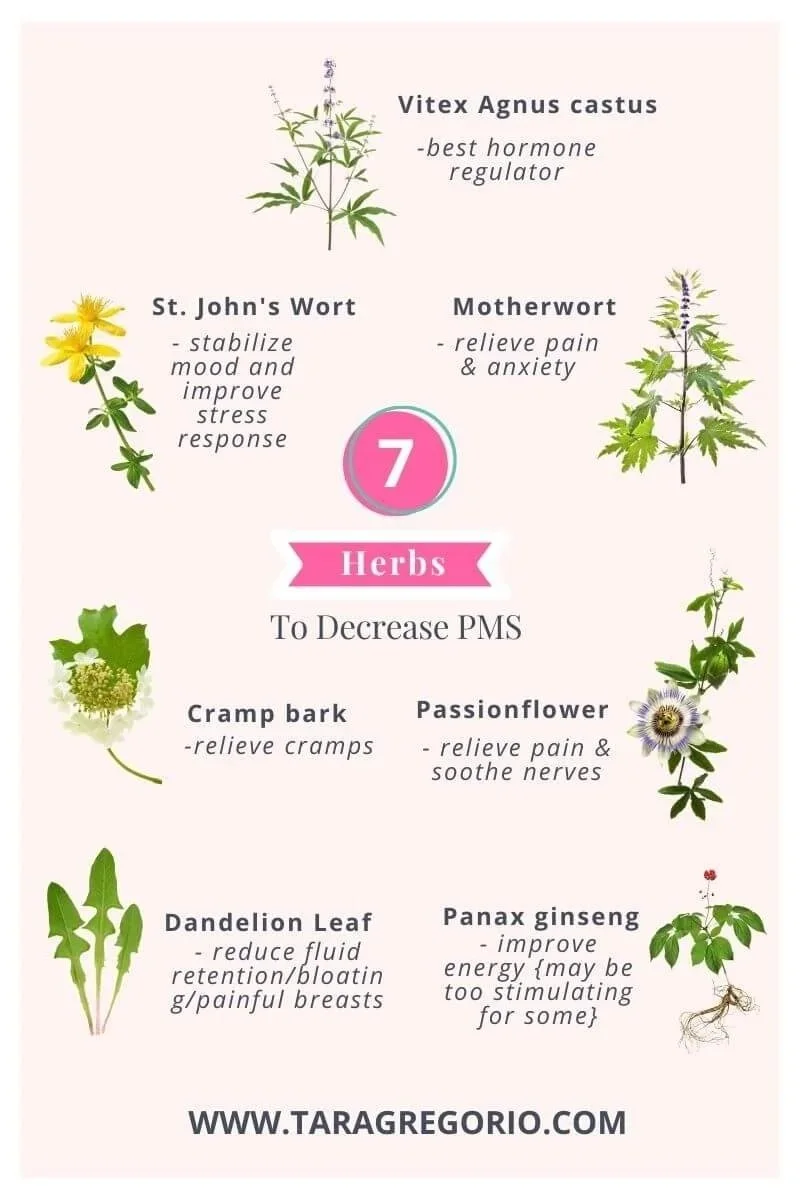
7. Add in Botanicals
Herbal medicine has been used for centuries to ease menstrual discomfort, and modern research is beginning to support these traditions. Certain herbs can balance hormones, improve mood, and reduce PMS symptoms.
Botanicals for PMS relief:
Vitex (Chaste Tree Berry): Supports luteal phase progesterone and reduces PMS symptoms like irritability, breast tenderness, and mood swings.
Study: Vitex agnus-castus has been shown to improve PMS and premenstrual dysphoric disorder (PMDD) symptoms. PMID: 28923150St. John’s Wort (Hypericum perforatum): Helpful for low mood, irritability, and depression patterns of PMS.
Study: Evidence suggests St. John’s Wort may improve mood symptoms related to PMS and perimenopause. PMID: 18784669Ginger (Zingiber officinale): Reduces menstrual cramps and inflammation.
Study: Ginger supplementation was found to significantly reduce pain severity in primary dysmenorrhea. PMID: 26177393Lemon Balm (Melissa officinalis): Calms the nervous system, reduces anxiety, and improves sleep.
Study: Melissa officinalis has anxiolytic and mood-enhancing properties that can benefit PMS-A (anxiety pattern). PMID: 25659075Dandelion Leaf (Taraxacum officinale): Acts as a gentle diuretic to ease bloating and fluid retention in PMS-H (hyper-hydration pattern).
Conclusion
PMS is common — but it’s not necessary.
You don’t have to suffer every month or rely only on pain suppression. By getting to the root of your discomfort, you can ease monthly stress, improve your mood, and even enhance fertility.
Removing dairy and meat during the luteal phase may decrease cramps and breast tenderness.
Increasing fiber supports elimination, reduces bloating and constipation, and helps clear excess estrogens through the gut.
Adding targeted herbal remedies like Vitex, ginger, St. John’s Wort, and lemon balm provides natural relief tailored to your PMS type.
✨ With cycle tracking, whole foods, mindful movement, stress reduction, and botanical support, you can transform your cycle into a time of balance and renewal rather than struggle.
xo
Tara
More Reading
References
Estrogen-gut microbiome axis: Physiological and clinical implications: https://pubmed.ncbi.nlm.nih.gov/28778332/
The Gut Microbiome and Female Health: https://pubmed.ncbi.nlm.nih.gov/36421397/
Gut-Brain Axis: Role of Microbiome, Metabolomics, Hormones, and Stress in Mental Health Disorders: https://pmc.ncbi.nlm.nih.gov/articles/PMC11394554/
¹Romm, A. Botanical Medicine for Women’s Health Churchill Livingstone, 2010