Why I Added Adaptogens When I Had Postpartum Depression

“One of the most important things you can do is have your vitamins checked postpartum and consider an IV of vitamins at a company like Restore Wellness. ”
updated: 4.19.24
1 in 7 women will experience postpartum depression. And some won’t even report it.
Isn't that amazing?
There are root causes for postpartum depression that our doctors are missing, and Adaptogens are one piece of the puzzle that can help us prevent burnout and reduce cortisol.
First, what are adaptogens?
Adaptogens are herbs that help us adapt to stress or keep us out of fight or flight.
You may experience increased heart rate, blood pressure, a sudden need to pee, or dilated pupils when you fight or flee.
Sounds, smells, and colors may all become more vivid because our senses go on high alert.
Intrusive or negative thoughts are common as well.
I remember hearing another baby cry, and it really agitated me…. Then they handed me the baby!
I could lull the baby to sleep, and it calmed my nervous system.
The problem is that many of us live in a chronic state of fight or flight, especially in the postpartum years when you’re being woken up at all times of the night. We can’t seem to get out of it.
Adaptogens PREVENT us from getting worse. They work on all systems of the body.
In traditional medicine systems, these are also known as “tonics,” and their purpose is to help restore adrenal health, ease anxieties, and reduce cortisol levels.
Why did I add adaptogens?
After my twins were born, I struggled with insomnia, dips in mood, and anger.
The mistake I made was taking one herb at a time. I was just taking valerian root for sleep, which was causing more nightmares.
When I enrolled to become a women’s herbal educator, I added Ashwagandha and Mimosa from an herbal tincture blend.
Boom! I immediately went for a run… it felt like my energy had to go somewhere; then I screamed - then I knew I would be ok.
Which adaptogens are safe while breastfeeding?
Read this post to learn more>>https://www.taragregorio.com/blog/8-must-have-adaptogens-for-breastfeeding-moms
“The ONE adaptogen that pulled me out of postpartum depression was Ashwagandha.”
Ashwagandha is known as the "strength of stallions" as it strengthens the immune system, reduces cortisol levels, and balances thyroid hormones. (It’s considered a Level 1 category, in the herb/risk during lactation categories and considered safe to take when you’re breastfeeding.)
Wondering if you can heal naturally?
Of course, adaptogens are just one piece of the puzzle.
Here are some additional root causes for depression…
5 Postpartum Depression Causes
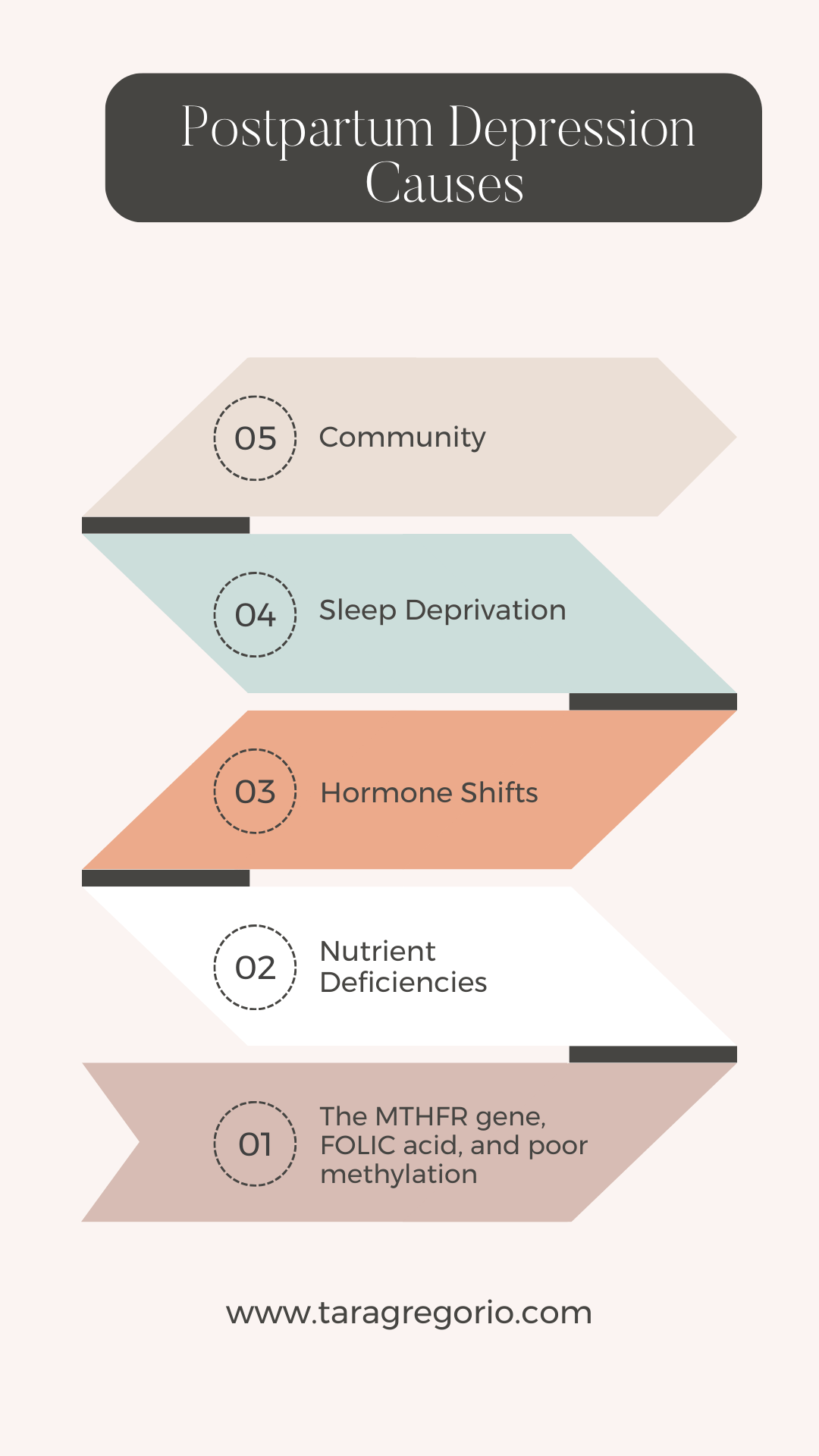
#1 the MTHFR gene, FOLIC acid, and poor methylation
Dr. Ben Lynch is the leading expert teaching us how methylation contributes to our postpartum health.
And, what are all of our vitamins made of? You guessed it, folic acid.
Read about the MTHFR gene and your health here: https://www.taragregorio.com/blog/postpartum-recovery-how-the-mthfr-gene-affects-your-health
If you have the gene, or even if you don’t, you want to consider supporting your methylation pathways. How?
Eat Folate daily
Take Folic acid out of your diet
Change your vitamin to a methylated B vitamin
#2 Nutrient Deficiencies
Postpartum women often have inadequate levels of essential fatty acids, B vitamins, zinc, and protein, all of which have been associated with PPD. ³*
Additionally, Dr. Amanda Rose from the book, Rebuild from Depression: A Nutrient Guide Including Depression in Pregnancy and Postpartum, suggests we need to soak our grains, nuts, and seeds to reduce phytic acid.
By soaking our grains, we absorb all the nutrients that are leaving us depleted.
Iron
*Iron is one of the most critical nutrients to replenish post-childbirth, especially if blood tests show anemia during your pregnancy.
The immense loss of blood during childbirth can dramatically deplete your iron stores, and eating a healthy diet or taking your prenatal vitamins may not be enough to make up the difference.
This is worrisome because anemia triggers the kind of fatigue commonly associated with depression.
>>>Consuming grass-fed beef and wild-caught fish can help fill any nutrient gaps you’re experiencing.
#3 Hormone Shifts
There’s an immense drop in progesterone during the postpartum period.
If you have the resources to have your hormones checked, I’d love to know if your progesterone is low.
Adding bio-identical progesterone, not progestin, topically from Day 14-28 should help insomnia, anger, and depression!
Additionally, your thyroid function can go from hyperthyroid to hypothyroid in a matter of months.
Why is autoimmune thyroid disease so common after birth?
When the normal immunologic changes that kept you from rejecting your baby as an alien being while she or he was in your uterus start to revert back to normal after birth, they can play some nasty little tricks on your own body tissue leading to autoimmune disease that targets the thyroid, especially in women who are already genetically susceptible.- Aviva Romm
#4 Sleep Deprivation
"Some research suggests that in the first year postpartum, the average sleep debt of Mothers is 700 hours." ~ Dr. Oscar Serrallach, M.D.
Asking for help with sleep is one of the best things you can do for your health.
#5 Community
And the lack of social and emotional support that most American mothers face also plays a critical role.
The support from family members during the postpartum period allows for the greatest care of both mother and baby, placing importance on bonding the new baby with the community.²
Conclusion
If you are struggling with postpartum depression, know that you are not alone. This is not your fault.
Diet, community, support, and botanicals can help you begin to nourish your body and help you overcome this feeling of hopelessness fast.
The first and hardest step is to ask for help.
Your friends, your loved ones, and your community want to help you; all you have to do is ask.
xo
Tara
References
² Andrews, Dr. Lia; 7 Times A Woman; Ancient wisdom on Health and beauty for every stage of your life
³Romm, Aviva Jill; The Natural Pregnancy Book
American Herbal Products Association; Botanical Safety Handbook ↩
Hales; Medications and Mother’s Milk: https://amzn.to/35XZFq5- more about conventional medication and nursing ↩
Bone & Mills: Principles and Practice of Phytotherapy ↩
¹ Aviva Romm: Botanical Medicine of Women’s Health- Categories from the German Commission E. pg. 418 ↩
Brinker, Francis: Herbal Contraindications and drug interactions ↩