5 Herbs to Balance Your Postpartum Hormones

Do you feel like your symptoms are hormonal?
Today, we’re going to explore five botanicals that can naturally balance hormones after childbirth and as you enter the peri-menopausal years.
The main hormones discussed in this blog post are estrogen and progesterone.
===But, hormone happiness requires a balanced cortisol level, healthy gut health, and estrobolome, and a balanced thyroid for the perfect harmony to take place.
By the end of this post, you’ll know exactly which botanicals to reach for to balance estrogen and progesterone.
But first, you want to start tracking your cycle.
Tracking your Cycle Naturally
I take notes on a calendar so I can keep track of all my symptoms, the days I’m supposed to start, and when I had it last.
I know you may love an app, but in the past, they have lost all my information! So, I prefer keeping a calendar for just tracking symptoms. Something to consider.
Additionally, you can watch the moon.
Often we begin bleeding on a full moon or a half moon, and then we would ovulate on the opposing moon. Pretty cool, right?
So, how do you start?
Make a note on Day 1.
Day 1 is when you first start bleeding. You can put a big circle that says period, or my friend, or whatever you want to call it.
Day 1-14; estrogen is rising, so you should feel good. You want to go out, be with people, and do things.
Around Day 14, you may notice your cervical mucus changes; this is when you ovulate, and you may notice you have other symptoms like insomnia or bloating around this time.
Day 14-28, progesterone (the calming hormone) should be rising, but if it doesn’t, you may experience insomnia, rage, anger, and anxiety.
Is it low progesterone or high estrogen?
The confusing part is that it can be both! And, it changes throughout your cycle.
Let’s look at your symptoms.
Here are 17 signs. The most prominent would be breast pain and heavy periods.
Cyclic breast tenderness,
Breast tenderness
Menstrual migraines
Heavy periods
Hot flashes
Uterine fibroids
Endometriosis, Uterine and breast cancers
Short menstrual cycles {<21 days}
Heavy periods
Mood swings
Depression
anxiety
Irregular bleeding
Weight gain
Gallbladder problems
History of using estrogen-containing birth control {last 3 months}
A pear-shaped body
17 Signs of Low Progesterone Postpartum
The most prominent signs are insomnia and discomfort on days 21-28.
No ovulation, irregular cycle
Heavy periods, blood clots
long menstrual cycles (>35 days)
short luteal phase {ovulation to menstruation <12 days}
anxiety, depression
PMS
constipation
cyclic breast pain
Low basal temperature in the luteal phase
endometriosis
fertility problems
insomnia, can’t sleep, especially on days 14-28
Irregular menstrual cycle
Irritability and anger before your period
low libido
miscarriages
spotting in the second half of your cycle
15 Signs of Low Estrogen Postpartum
The most prominent symptoms are vaginal dryness and poor focus.
Irregular or absent periods
Trouble falling asleep, waking in the night
Anxiety, depression
Hot flashes, night sweats
Vaginal dryness
Urinary frequency or UTIs
Low libido
Weight gain
Brain fog, poor focus
Long menstrual cycles or scant periods
Migraines
Joint aches or pains
Loss of bone density
Auto-immune disorder
Sex may be painful due to vulvovaginal dryness
And, you can have both throughout your monthly cycle!
As a side note. We don’t tend to have high progesterone.
How do we heal this chaos?
Diet is always first.
Avoiding alcohol, consuming little to no cow’s milk dairy (as it’s inflammatory) and caffeine, and eating whole grains, grass-fed meat, fruits, and vegetables daily.
A note about dairy: You may do better with sheep or cow’s milk for easier digestion.
Along with keeping our stress low, which can be challenging when raising children.
Estrogen Dominance Treatment
8 Steps to reduce estrogen dominance and increase progesterone
If you have too much estrogen, you must clear it from your body.
Xenoestrogens are synthetic industrial chemicals, known to bind to our estrogen receptors and increase our risk of cancer. source
How do you clear estrogen from your body?
1. You want to reduce toxins in your environment as much as possible.
Clear all plastics from your environment, use natural products to clean, and consider natural makeup products.
Use the EWG app to check all products in your home and slowly start replacing them with natural products.
2. Stop all alcohol, as this increases your risk for breast cancer by 30-50%, increases estradiol, and interrupts your sleep. source
3. Work on your gut health.
You want to be pooping 2-3x a day to complete a banana shape.
Work towards a type 3/4 from the Bristol Stool Chart.
4. Increase your progesterone with diet and herbal remedies. You may also need to add bio-identical progesterone.
5. Increase your fiber daily to aid digestion. Strive for 50g/day.
Dr. Bill Bulsiewicz suggests adding Magnesium Daily and SLOWLY adding in a fiber supplement with lots of water each day.
6. Support your liver
Supporting your liver is a lifelong practice.
Sweating, skipping alcohol, applying a castor oil pack, ridding your body of parasites, and using Tudca are a few ways to support your liver and aid estrogen elimination.
7. Reduce your weight:
As fat mass increases in obesity, aromatase expression and, consequently, estrogen levels are also elevated, an effect that is more prominent in postmenopausal women, as after menopause, adipose tissue is the primary source of estrogen production in the body
8. Get tested for the MTHFR gene- and take the appropriate supplements to aid methylation.
Estrogen Flushing Juice
For a healthy way to release excessive estrogen from your body, consider juicing
carrots, beets, celery, and lemon to support your liver 3x week
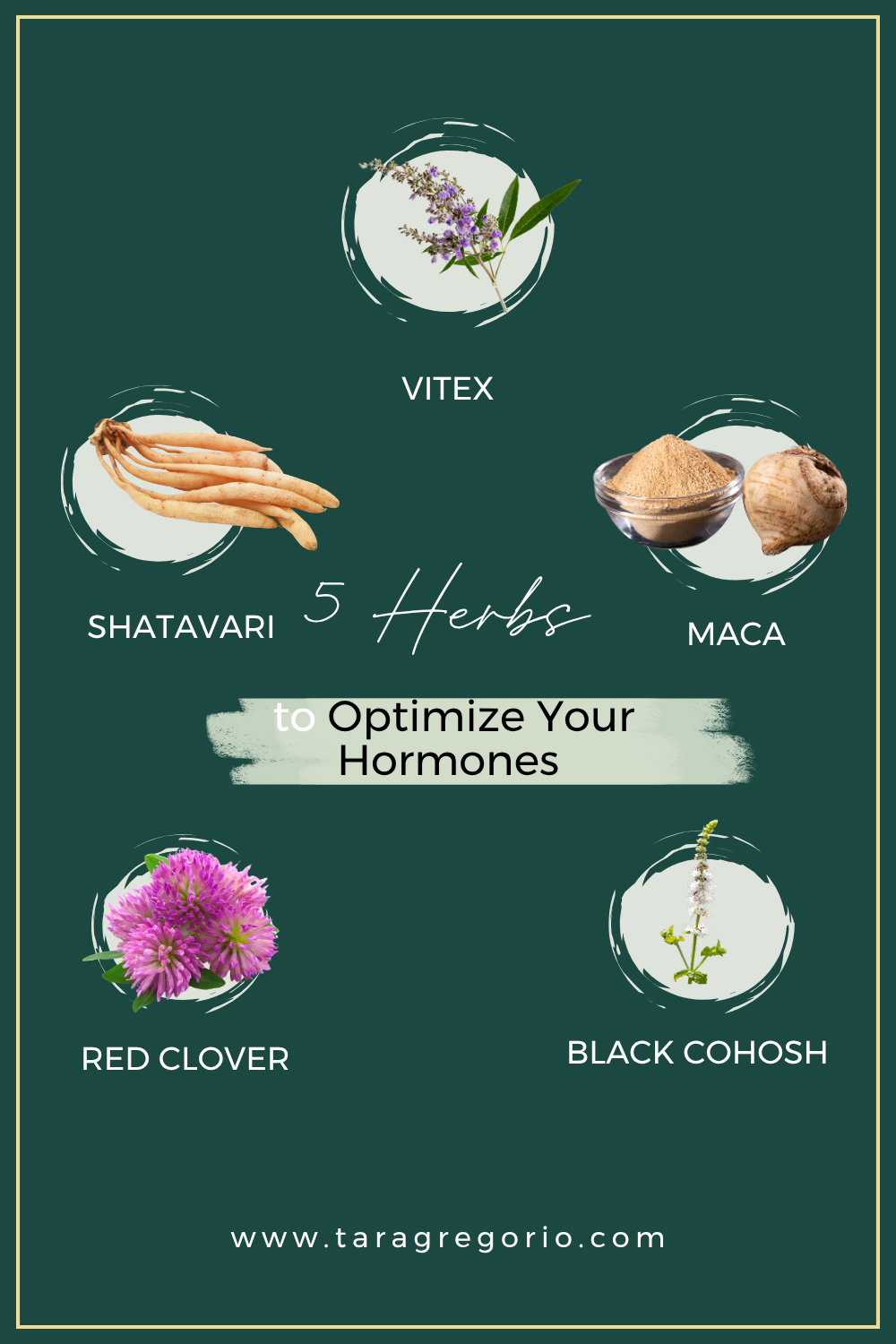
2 Herbs to Increase Progesterone Naturally
Vitex agnus-castus L., Vitex Chaste Berry
Historically Used
The ripe berries of the chaste tree have long been regarded as a symbol of chastity and were used in the Middle Ages and earlier to suppress sexual excitability. Additionally, Vitex was used to promote lactation, and menstrual irregularities and decrease male libido, and enhance female fertility. ⁶
Modern Uses: It’s known to enhance corpus luteal development, thereby correcting progesterone deficiency and lengthen the luteal phase. {the second half of your menstrual cycle}
Promotes progesterone production through hypothalamic pathways and may reduce hot flashes in perimenopausal and menopausal women.
Used by herbal practitioners to prevent miscarriages in women who’ve had a history of miscarriage. ⁷
Dosing: Varies depending on your symptoms, if you’re postpartum, and your health goals.
It’s common practice to take 1-5 ml of tincture in the morning before any other foods or supplements, throughout the cycle. {see caution below}
Note: Vitex Chaste Berry can downregulate prolactin production. So if you’re breastfeeding, start slow and watch for milk production. If it drops, reduce your daily dose.
Dosing: Lower the dosing to 1ml in the am if you’re breastfeeding and don’t want your period to return. As you increase the dosage, watch for your cycle to return and lower the amount based on your unique needs.
Caution:
Don’t mix Vitex with Hormone Replacement Therapy or the birth control pill.
Postpartum Depression: In the case of vitex and depression, it seems that for patients with PMS-D, their depression is due to low estrogen levels, and vitex can worsen their symptoms. source
This happened to me! So use caution with Vitex in the postpartum period.
If you’re postpartum and sensitive to Vitex, it increases your depression; I’d start with Shatavari and ask your doctor about adding myo & d-chiro to help regulate your blood sugar.
Read the dos and don’ts of Vitex Chaste berry HERE
2. Wild Yam - Dioscorea Villosa
Traditional Use: Taken internally, Wild Yam can help reduce joint pain, relieve cramping, prevent incontinence, moderate hot flashes, decrease erratic bleeding, influence fertility, help with any endocrine imbalance, improve digestion, treat nausea, lower blood pressure and cholesterol, improve circulation, and calm nerves. ⁷
The botanical safety handbook states: “Wild yam contains the compound diosgenin, commonly and mistakenly promoted as a natural source of progesterone.” Diosgenen has a weak estrogenic effect.
Diosgenen has been used as a precursor for the synthesis of progesterone, but the transformation required to form progesterone does not occur in the human body. {Dentali 1996} ⁴ { pg308}
So, why did I add wild yams to my post?
Biochemists are combining the compounds of wild yams with molecular progesterone to make what’s known as bioidentical progesterone or body-identical progesterone.
Wild yams contain the extract in which the precursor for the synthesis of progesterone, diosgenin, is present.
The chemical reactions required to convert the diosgenin in wild yam extract to progesterone can be carried out only in a laboratory and do not occur in the body.
Breastfeeding Safety: Safety Class 1, Interaction Class A. Wild Yam ALONE is safe while breastfeeding, BUT Caution: watch for products that have synthetic progestin added to wild yam.
Caution: It’s not suggested for those with a history of sex hormone-dependent cancers and taking hormone contraception.
Wild Yam Cream, Does it work?
Bio-identical progesterone from a compounding pharmacy or a product like Pro Progesterone Quick Silver could help boost progesterone levels and decrease insomnia and blood clots, saving you from unnecessary hysterectomies.
Log in to Fullscript to see the Quick Silver Product.
Wild Yam Cream for Heavy Periods
Wild Yam, only WITH progesterone added, can stop blood clots.
I had this experience.
Check this website out to see if your pill is progestin or progesterone.
Bioidentical Progesterone Dosing
You would apply 1 ml of the bioidentical progesterone cream behind your knees or your elbows, from day 14 of your cycle to day 28 {when you start bleeding} to reduce anger, rage, and blood clots.
3 Herbs to Increase Estrogen Naturally
1. Trifolium pratense L {Red Clover}
Traditional Use: Red clover contains isoflavones, compounds that are structurally similar to the human hormone estradiol and capable of binding to estrogen receptors - enhancing estrogen effects. ¹
Modern Uses: As a Phytoestrogen, it’s being used for complaints of peri-menopause and menopause, vaginal dryness, and atrophy.
Dosing: 1-2 cups of tea a day or as a tincture
Breastfeeding Safety: Although it is Safety Class 1, Interaction Class A, Dr. Aviva Romm states not to be used during pregnancy and lactation because of the potential estrogenic activities.
Caution if taking hormonal contraceptives or HRT.
Susan Weed, Master herbalist and author of New Menopausal Years, calls Red Clover a phytoestrogenic “food-like” herb and suggests drinking 1-2 quarts of red clover a week to support
Hormones
Reverse premature menopause
Improve your chances of having children after the age of 40
Moderate the intensity of hot flashes
Improve memory
Ease anxiety, relieve muscle and joint pain
Increase vaginal lubrication
Ease incontinence and relieve cystitis
Prevent strokes and osteoporosis
2. Asparagus Racemosus- Shatavari
Translated as "she who has hundreds of husbands", Shatavari can be used to enhance your libido and enhance fertility.
Historically used: as a reproductive tonic in India, and has traditionally been used to prevent threatened miscarriage. ²
It was prepared in milk, ghee, or water and used throughout pregnancy. Safe during pregnancy and while breastfeeding
Qualities: sweet, bitter, warm, moist
Modern Day uses: It's also great for minor hormonal imbalances, reduces vaginal dryness and dry skin, and improves libido.
A diuretic and soothing demulcent; it relieves urinary and gastric irritation.
>>> For moms, if you're feeling dry and inflamed, especially in the urethra, cystitis (inflammation in the bladder), and experience a dry cough, this herb may be for you!
Safety Class C: Compatible with breastfeeding
Dose: Tincture; 20-30 drops; 2-3x day
Notes: If you have adverse effects from a tincture, you may want to try a supplement or ground powder form. Avoid if you have a history of estrogen-receptor-positive cancer.
Traditional recipe: Boil Shatavari root, sugar, honey, pippali long pepper, and milk. Follow this recipe
Dr. Aviva Romm states: It has mild estrogenic and cholesterol-lowering effects.{source}
3. Lepidium meyenii, Maca
Historical Use: A Peruvian plant, Maca was used as a food supplement as it’s filled with so many vitamins and minerals. It’s sold as an adaptogen energizer and fertility-enhancer, and it acts on sexual dysfunctions, osteoporosis, benign prostatic hyperplasia, memory, and learning, and protects skin against ultraviolet radiation. source
Modern Uses: Although it’s been suggested that it increases estrogen levels, no changes in hormone levels have been found. {source}
It’s possible, due to the great nutritional value and high levels of amino acids, iron, and zinc, Maca fills nutrient gaps and increases one’s overall health.
In this one study, Maca appears to support the endocrine glands more than phytoestrogens, which may be why women feel better taking Maca when they have low estrogen levels.
Dosing: 1tsp. In water daily. Other moms and I have been enjoying it in our coffee.
Breastfeeding Safety: Safety class 1, Interaction class A- safe
Additional benefits of Maca can be found HERE
Why Vaginal Dryness?
Estrogen helps lubricate your vagina. So when estrogen is low, you’ll feel very dry and uncomfortable. This can lead to vaginal atrophy.
What is Vaginal Atrophy?
Vaginal atrophy is when the lining of your vagina gets drier and thinner.
This results in itching, burning, and pain during sex and can also contribute to more urinary tract problems.
Vaginal Dryness Cream
The best vaginal cream with estriol is Bezwecken Hydration Ovals 1x or 2x.
Insert vaginally 2-3x week for great relief. Log in to FullScript to order them
You can also alternate these with Honey Pot Boric acid suppositories as well.
Postpartum Hormone Therapy
If you’re struggling with your hormones, you want to first have your blood tested. Ask your doctor for
A full thyroid panel
Hypo and hyperthyroidism can happen within the first year
Vitamin D, B, and Iron (ferritin) Levels
Consider getting an IV of vitamins if needed
Reduce your caffeine and alcohol intake and replace them with herbal teas
Start with the ONE daily tea blend and drink most days of the week {this is the most nourishing way to start healing your body}
Try an herbal blend with Vitex Chaste Berry to start. If you notice your depression getting worse, switch to Shatavari.
We use the adaptogens + nervine framework within The Present Momma to stay calm
Get tested for the MTHFR gene and consider using folate, not folic acid
My favorite books for natural hormone-balancing
Conclusion
A balanced hormone cycle consists of many different pieces of your lifestyle. Diet is always first. Taking the right supplements and then drinking herbal teas are the fastest ways to nourish your body.
Although hormone therapy is popular and very helpful (I was able to avoid a hysterectomy with a bioidentical cream), Susan Weed suggests this is a time to slow down, check in with your body, and restore. “As you accept this death, you crown yourself as a crone.”
Listen to the wisdom you already know. As a mom, it’s hard to take time for yourself and learn to heal, but you know more than any doctor could ever tell you.
Herbal teas will help fill your nutrient gaps, tinctures can help support your cycle and then notice what else needs to change as you enter a new season of your life. What do you have to let go of?
xo
Tara
P.S. What are your thoughts on using these botanicals? Let me know in the comment area below!
Resources
American Herbal Products Association; Botanical Safety Handbook 2nd edition
¹Pg 868 Red Clover
⁵Pg 506 Maca
⁶Pg. 489 Vitex
⁷New Menopausal Years; The wise woman way- Susan Weed
Estrobolome: https://blog.organicolivia.com/why-your-gut-bacteria-matters-for-endometriosis-hormone-imbalance-the-estrobolome/
Xenoestrogens: https://www.ncbi.nlm.nih.gov/pmc/articles/PMC8395949/
Environmental Working Group: EWG
Alcohol and Breast Cancer: https://www.ncbi.nlm.nih.gov/pmc/articles/PMC3832299/
Diosgenin:https://www.ncbi.nlm.nih.gov/pmc/articles/PMC9168095/
Chasteberry: https://medherb.com/Materia_Medica/Vitex_and_suicidal_depression.htm
Chasteberry:https://www.ncbi.nlm.nih.gov/books/NBK501807/
Red clover is weakly estrogenic:https://pubmed.ncbi.nlm.nih.gov/11773503/
Maca: https://www.medicalnewstoday.com/articles/322511#risks