Perimenopause: Age, Stages, Signs & First Steps
Master herbalist, Susan Weed, states, “If you think you’re in perimenopause, you probably are”.
The chaos of emotions and symptoms with perimenopause can begin as early as age 35 and last eight to ten years.
Couple this with raising young children and caring for your parents, and it’s a very demanding season in our lives.
Perimenopause Age
Perimenopause can begin as early as your early 30s and as late as your late 40s. The average age for menopause is around 52, which means this long transition, sometimes lasting a decade or more, can feel confusing, exhausting, and downright frustrating.
For many of us who had children later in life (I was 36), the first hormonal drops may have started years earlier without us realizing it was the beginning of “the change.” Those subtle signs, irregular periods, mood swings, or changes in sleep, were easy to dismiss at the time, but now they make more sense.
In this post, we’ll explore some of the strange and less-talked-about perimenopause symptoms you might be experiencing, share the first five steps to start feeling like yourself again, and point you toward follow-up blog posts where we dig deeper into managing this rollercoaster season naturally.
So, what are the symptoms of perimenopause?
They vary widely from woman to woman, but here are some of the most common and often overlooked symptoms you may notice as your hormones begin to shift.
Perimenopause, What Is It?
Perimenopause refers to the transitional period usually lasting 2 to 8 years before the complete cessation of menstruation. It’s marked by fluctuating hormones that can cause a wide range of physical and emotional symptoms. [source]
Medically, other indicators of perimenopause include:
An elevated follicle-stimulating hormone (FSH) of 60–100 mIU/L
An estradiol level of less than 30 pg/mL [source]
Menopause itself is officially diagnosed when you have gone 12 consecutive months without a menstrual period.
Perimenopause Symptoms
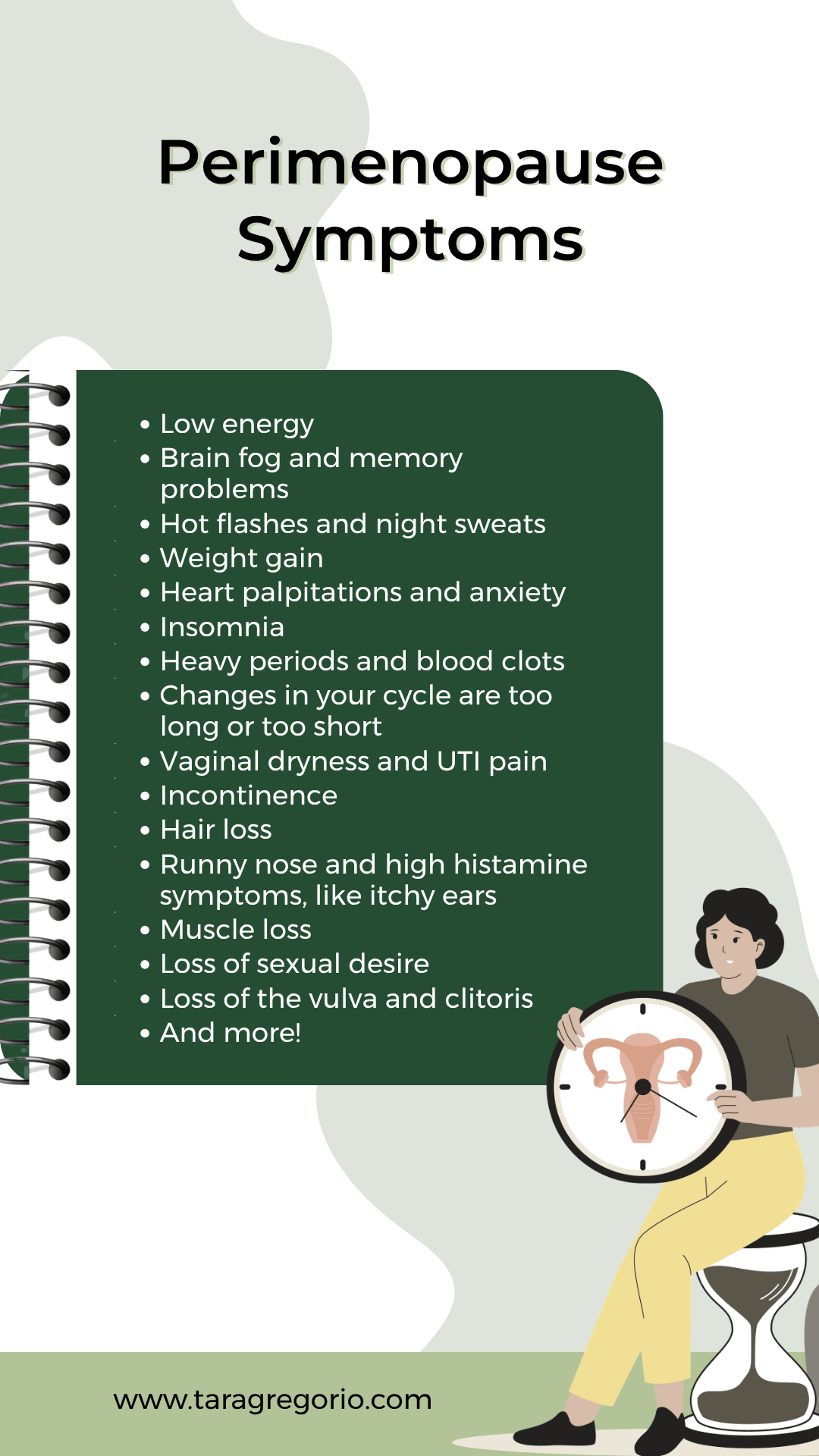
Symptoms vary greatly from woman to woman, but here are some of the most common and often surprising signs of perimenopause:
Low energy
Brain fog and memory problems
Hot flashes and night sweats
Weight gain
Heart palpitations and anxiety
Insomnia
Heavy periods and blood clots
Changes in your cycle are too long or too short
Vaginal dryness and UTI pain
Incontinence
Hair loss
Runny nose and high histamine symptoms, like itchy ears
Muscle loss
Loss of sexual desire
Loss of the vulva and clitoris
And more!
The First Sign of Perimenopause: Changes in Your Cycle
One of the earliest and most telling signs of perimenopause is a change in your menstrual cycle. You may notice your cycle becoming shorter or longer than usual. Your flow might change too, maybe you’re passing more blood clots, or your period is suddenly lighter than it used to be.
Insomnia often appears at this stage. For many women, the week before their period, known as the luteal phase, becomes especially challenging. A sharp drop in progesterone during this time can trigger mood changes, rage, anxiety, and restless nights. This combination of hormonal imbalance and disrupted sleep is one of the hallmark patterns of early perimenopause.
The First 5 Steps to Relieve Perimenopause Symptoms Naturally
1. Track Your Cycle for Better Perimenopause Remedies
The very first step in balancing hormones naturally is to track your menstrual cycle. Noticing whether your cycle is shortening or lengthening can reveal important hormonal shifts.This is key because the right herbal remedies, supplements, or bioidentical hormones depend on where you are in your cycle.
By charting your start date, flow length, and any irregularities, you’ll have a clear picture of what’s changing and how to support your hormone balance naturally.
2. Track Your Perimenopause Symptoms
Equally important is tracking your symptoms alongside your cycle.Do you feel more anxious or irritable the week before your period?
Do you have hot flashes during ovulation?
Are you experiencing breast tenderness, sleep disruptions, or ovarian pain?
Mapping these patterns helps identify whether symptoms are related to low progesterone, fluctuating estrogen, or cortisol imbalance, allowing you to choose the most effective remedies for your body.
3. Consider a DUTCH Hormone Test
If your budget allows, the DUTCH hormone test is one of the most powerful tools for understanding your hormones in perimenopause.This at-home urine test (paid out-of-pocket) measures estrogen, progesterone, cortisol, and how your body metabolizes these hormones. It can reveal if you’re estrogen dominant, low in progesterone, or dealing with adrenal stress and guide whether bioidentical progesterone, herbal remedies, or detox support should be your next step.
Or, you can schedule an appointment with Joi and Bloke to receive a script for bloodwork within 24 hours.
4. Use Your Results to Guide Bioidentical Hormone Therapy
Once you know your hormone levels, you can make informed decisions about bioidentical hormones.These can now be purchased online, but they must be used correctly for best results.
Proper timing, correct dosing, and liver support are all essential for balancing hormones naturally in perimenopause.
5. Start with Bioidentical Progesterone
In perimenopause, the first bioidentical hormone most women benefit from is progesterone.Taken only from day 14 to day 28 of your cycle, bioidentical progesterone can improve sleep, reduce anxiety, lower histamine reactions, and lessen heavy bleeding.
I recommend topical bioidentical progesterone cream or oral Prometrium, never synthetic progesterone.
Before starting, open your drainage pathways and support your liver with herbs and nutrients to ensure your body can process hormones efficiently, reducing side effects and maximizing benefits.
Learn more about liver support HERE: https://www.taragregorio.com/blog/natural-liver-detox-9-ways-to-support-your-liver-estrogen-clearance
When bioidentical progesterone is combined with herbal remedies such as liver-supporting herbs, magnesium, and adaptogens, you can ease hot flashes, improve mood, and finally sleep! For a while, then this shifts again in later perimenopause.
This integrative approach addresses both the symptoms and root causes of hormonal imbalance during perimenopause.
If you’re ready to go deeper, check out my follow-up posts below or schedule a call today!
Conclusion
As herbalist Susan Weed beautifully says: “The joy of menopause is the world’s best-kept secret.” You may not feel that joy right now, but know this: when you approach this season of change with curiosity, nourish yourself with new diet ideas, and sip herbal teas to fill nutrient gaps, you’ll find yourself navigating perimenopause with more love and kindness.
By this stage, your children may be growing older, giving you more time for yourself. This is your opportunity to nurture your body in ways you couldn’t when you were younger, lifting heavier weights to protect bone health, building in intentional rest, and listening deeply to the wisdom of your body.
Perimenopause invites us to release the insecurities of our 20s and 30s and embrace the changes ahead with grace and ease. And when you explore bioidentical estrogen and progesterone paired with lifestyle and herbal support, you may notice remarkable improvements: brain fog lifts, energy returns, and heavy bleeding with blood clots becomes a thing of the past.
Ready to learn more?
Book a private health consultation for natural support from a certified herbalist. Book it here.
xo
Tara
More Reading