Postpartum Depression? Try These 5 Natural Herbs!
Signs and Symptoms of Postpartum Depression
Crying all the time, insomnia, physical pain, and even episodes of screaming, rage, and anger are common signs of postpartum depression. Let’s not forget intrusive thoughts, frightening, unexpected ideas that seem foreign and terrifying. These are all indicators of postpartum depression.
Today, we'll explore:
Five botanical remedies for postpartum depression
Four proven ways to break through this block and start your healing journey naturally
If you’re overwhelmed with motherhood and need a roadmap, download the Postpartum Recovery Roadmap below. This guide dives into the root causes of postpartum depression and offers actionable steps to help you heal naturally and feel like the best version of yourself.
My Journey
Over a decade ago, I battled anxiety, depression, insomnia, and rage. Though I may chuckle now, it was anything but funny at the time. I didn’t even realize I had postpartum depression.
I’m grateful you’re here because the sooner you recognize your symptoms, the sooner you can seek help. Whether through me or a healthcare provider or me, reach out for support. Postpartum depression doesn't just go away; it requires attention and care.
I vividly remember when my late husband told me about a woman who drove her children into a lake. I had an intrusive thought:
"I could do that."
That’s how intrusive thoughts work; they scare you because they feel so foreign. But it’s important to know that sharing these thoughts with a professional won’t result in your children being taken away. Don’t let fear stop you from seeking help.
Five Botanicals for Postpartum Depression
1. St. John’s Wort: The #1 Antidepressant Botanical
Known for its antidepressant properties, St. John’s Wort also supports the liver by clearing excess estrogen, which can contribute to hormonal imbalances.
However, it can interact with SSRIs, so consult with your healthcare provider before combining it with medication.
While breastfeeding, some moms avoid it due to its level 2–3 safety rating, but many have used it successfully.
2. Ashwagandha: Stress Reliever and Mood Stabilizer
Popular for both men and women, Ashwagandha is a safe adaptogen while breastfeeding (level 1 safety rating).
The powder or supplement form is recommended over the tincture.
It’s not suitable for hyperthyroidism, so monitor your symptoms.
If it doesn’t work for you immediately, store it for later. Your body might respond better as you heal.
3. Lemon Balm; The Gladdening Herb
Known to lift mood and bring joy, lemon balm is safe for breastfeeding.
However, as part of the mint family, it may alter the taste of breast milk.
Enjoy it as a tea with milk and honey or offer it to children as a popsicle.
4. Tulsi Tea (Holy Basil): Brain Fog and Immune Support
An Ayurvedic herb known for enhancing mental clarity and boosting immunity.
Swap your second or third cup of coffee for a soothing cup of Tulsi tea.
It pairs well with green tea for an afternoon pick-me-up.
5. Mimosa (Albizia Julibrissin): The Happiness Bark
Traditionally used in Chinese medicine for emotional balance, mimosa bark helps with depression and irritability.
It can be combined with Ashwagandha in a blended formula for enhanced support.
Four Proven Ways to Heal Postpartum Depression
1. Exercise: The Natural Mood Booster
As a former fitness instructor and personal trainer, I can’t emphasize enough how powerful movement is for mental health.
Aim for 20-30 minutes of exercise daily, especially outdoors for vitamin D exposure.
Prioritize weight training as your children grow; it helps you feel physically and mentally stronger.
2. Vitamin Support
Low levels of vitamin D and B can worsen depression.
In my Present Momma program, I cover identifying and addressing nutrient gaps.
Test your vitamin D levels and ensure they are in the optimal range.
3. Bright Light Therapy
Bright light therapy helps regulate cortisol and reduce depression.
Red light therapy, in particular, is beneficial for:
Reducing inflammation
Boosting mood
Enhancing overall healing
Consider investing in a sauna or red light therapy device as part of your healing routine.
4. Therapy: Emotional Healing
Talk therapy is a proven method, but if it’s not for you, consider art therapy, EMDR, or alternative approaches.
I found EMDR life-changing. It helped me become a different person, more grounded and resilient.
If you haven’t found the right therapist, keep searching until you find the right fit.
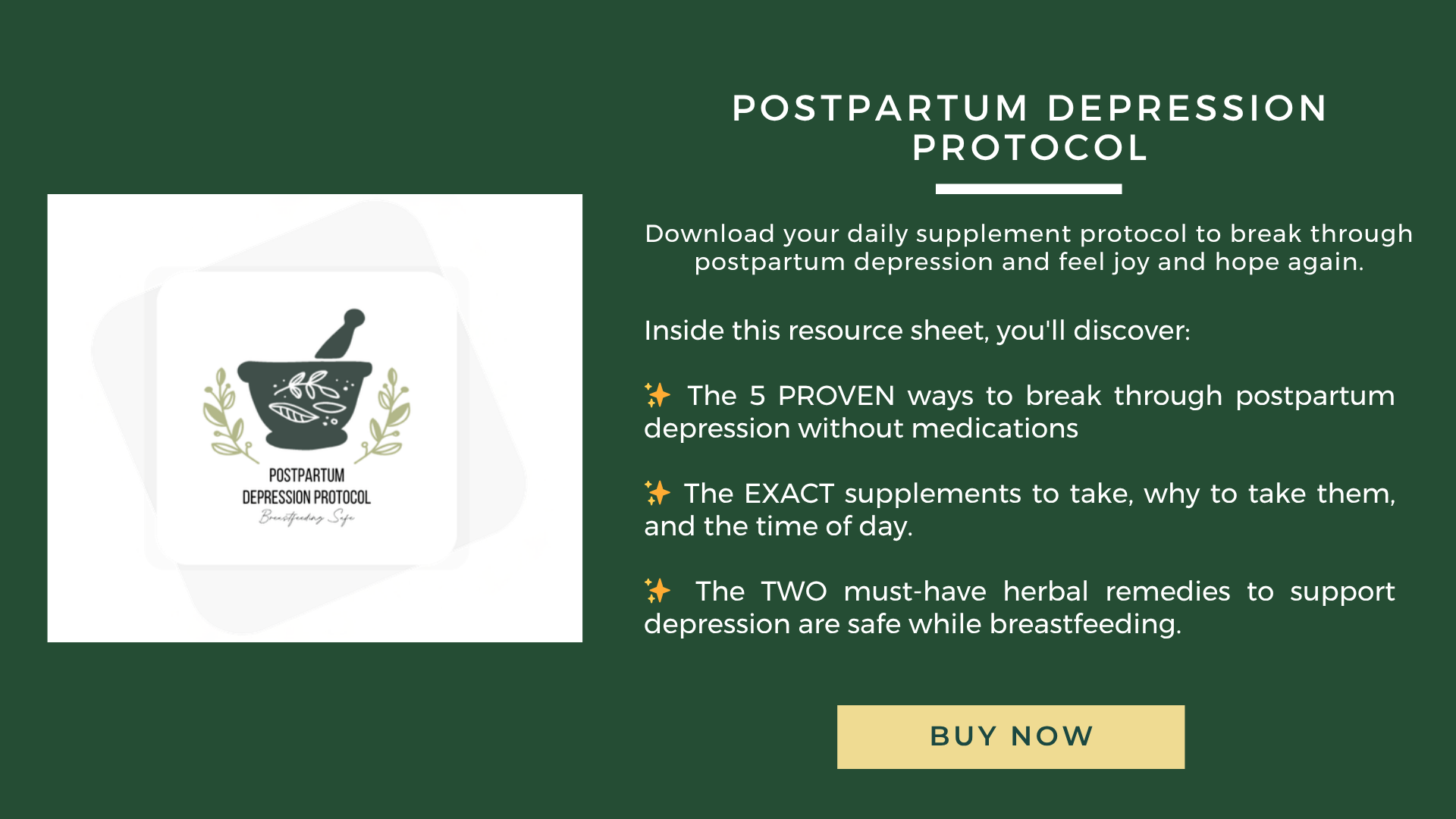
What Is The Present Momma?
The Present Momma program offers a four-step method for healing postpartum depression naturally:
Replenish – Identify and address nutrient gaps through bloodwork and personalized supplementation.
Release – Use EFT tapping and vagus nerve exercises to release trauma and reduce intrusive thoughts.
Remedies – Learn proven herbal solutions for insomnia, depression, anxiety, and emotional stability.
Gut Healing – Since 80% of serotonin is produced in the gut, healing the gut lining reduces inflammation and supports emotional well-being.
When you enroll, you’ll gain access to:
The six-week Present Momma blueprint
A closed Facebook group for support
A 20-minute virtual session with me (limited time offer}
There’s a 90-day promise. If the program doesn’t improve your mood and energy levels, you can request a refund.
Conclusion
Healing your body is possible. It takes time, nourishment, and nervous system regulation. Watch the video for a full description of botanicals to start exploring.